
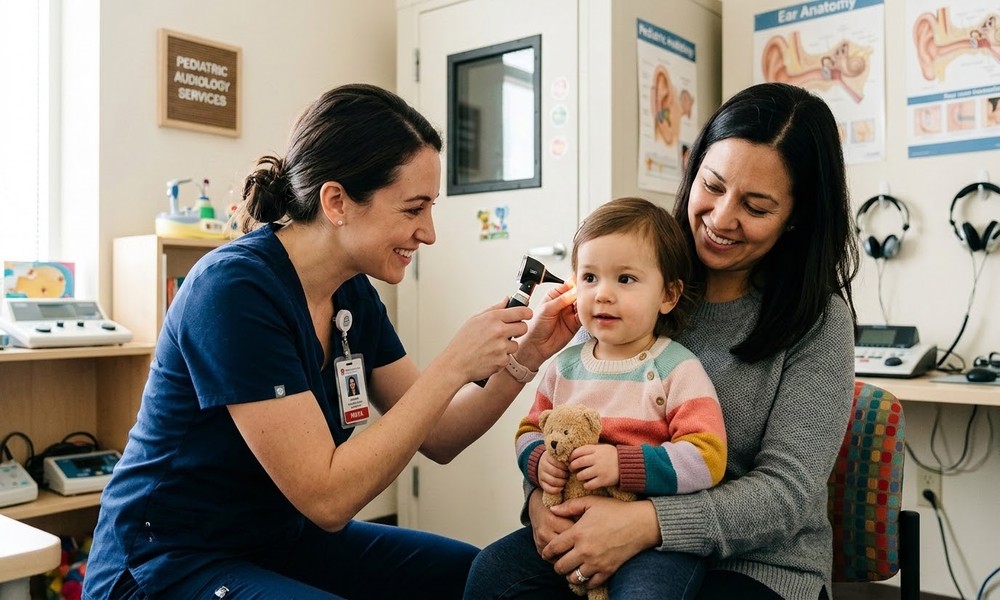
Ear and hearing health affects much more than the ability to hear sounds clearly. In infants and children, it can shape speech development, balance, learning, social confidence, feeding patterns, and overall communication. In adults, untreated hearing or structural concerns may affect safety, relationships, work performance, and emotional well-being.
Early evaluations are important because many ear and hearing concerns are easier to manage when they are identified before they begin to affect daily life. Some issues involve hearing sensitivity or sound processing. Others involve the outer ear, ear canal, recurring infections, or visible ear structure. While not every concern requires treatment, an early assessment can help families and patients understand what is normal, what should be monitored, and when intervention may improve long-term outcomes.
Early Evaluation Helps Identify Problems Before They Escalate
The ear is a small but complex part of the body. It includes the outer ear, ear canal, eardrum, middle ear bones, inner ear structures, and nerves that carry sound information to the brain. A concern in any part of this system can affect hearing, comfort, balance, or development.
Early evaluation helps separate temporary issues from concerns that need closer attention. For example, a child with fluid behind the eardrum may hear sounds as muffled, even if they do not appear to be in pain. A baby with feeding challenges may also show patterns that warrant a broader look at development, muscle tone, or ear, nose, and throat function. An adult who slowly turns up the television over time may not realize how much hearing clarity has changed.
The value of early care is not only in diagnosis. It also gives patients and families a clearer path forward. Sometimes the recommendation is monitoring. Sometimes it is a hearing test, imaging, medical care, feeding support, hearing technology, or structural evaluation. In each case, early information helps guide better decisions.
Infant Development Can Offer Early Clues
In babies, ear and hearing concerns can overlap with early feeding, sleep, and communication patterns. A newborn may not be able to explain discomfort, but caregivers may notice difficulty latching, poor feeding stamina, delayed response to sound, frequent congestion, or unusual fussiness. These signs do not always point to a hearing problem, but they can be part of a larger developmental picture.
Early infant support can be especially useful when families are trying to understand whether feeding difficulties are temporary or connected to other concerns. Corporate Lactation Services provides breastfeeding and infant support, including access to lactation consultant guidance and early infant feeding and development support. In a broader care plan, this type of support can help families observe feeding patterns, identify challenges early, and know when to seek additional medical or developmental evaluation.
The first months of life are a sensitive time for growth. Hearing, feeding, oral development, breathing, and caregiver bonding all interact in important ways. When families receive guidance early, they are better equipped to respond calmly and appropriately rather than waiting until small concerns become more stressful.
Hearing Is Closely Connected to Speech and Learning
Children learn language by hearing sounds repeatedly and connecting those sounds to meaning. Even mild or temporary hearing difficulty can affect how clearly a child receives speech. When a child misses parts of words, soft consonants, or speech in noisy environments, language learning may become harder.
This is why early hearing checks matter even when a child seems to hear some sounds. A child may respond to loud noises but still struggle with softer speech. They may hear well in quiet rooms but miss instructions in a classroom. They may appear inattentive when the actual issue is reduced hearing clarity.
Early intervention can reduce the risk of delays in speech, reading readiness, and classroom participation. When hearing concerns are identified early, children may benefit from medical treatment, speech-language support, hearing technology, classroom accommodations, or monitoring. The goal is not to label the child. The goal is to make sure the child has full access to sound and communication during key stages of development.
Structural Ear Concerns Can Affect Function and Confidence
Ear evaluations are not limited to hearing tests. The shape, position, and development of the outer ear can also matter. Some structural differences are present from birth, while others become more noticeable as a child grows. Prominent ears, asymmetry, ear folding differences, or changes related to injury can raise functional, cosmetic, or emotional concerns.
An ear structure evaluation can help determine whether a visible difference is simply a normal variation or something that may benefit from treatment. North Texas Facial Plastic Surgery provides information on ear pinning, ear structure evaluation, and otoplasty in Plano. In an educational context, these services relate to the broader point that structural ear concerns should be assessed thoughtfully, especially when they affect comfort, fit of hearing devices, self-image, or daily functioning.
For children, timing can be important. Some families seek evaluation before school age because teasing or self-consciousness may begin early. For adults, structural evaluation may follow years of discomfort, dissatisfaction, or difficulty with devices such as glasses, masks, helmets, or hearing aids. A professional assessment helps patients understand realistic options and whether intervention is medically or personally appropriate.
Early Care Can Reduce Social and Emotional Strain
Hearing and ear differences can affect social development in subtle ways. A child who cannot hear clearly may withdraw, become frustrated, or seem distracted. They may avoid group play because background noise makes conversation difficult. Adults with untreated hearing loss may stop joining conversations, especially in restaurants, meetings, or family gatherings.
Structural ear concerns can also influence confidence. A child with prominent or differently shaped ears may become aware of appearance earlier than adults expect. While not every visible difference needs correction, emotional impact is still worth acknowledging. Listening to the patient’s experience is part of responsible care.
Early evaluation gives families and individuals more choices. It can confirm that no treatment is needed, offer reassurance, or identify options before emotional strain grows. When people understand what is happening and what can be done, they often feel less isolated and more in control.
Acute Symptoms Should Be Taken Seriously
Some ear concerns develop gradually, while others appear suddenly. Ear pain, drainage, fever, dizziness, sudden hearing changes, swelling, or injury should be evaluated promptly. Children are especially prone to ear infections, and repeated infections can sometimes affect hearing, sleep, behavior, and school performance.
Pediatric urgent care and family care can play an important role when symptoms are uncomfortable, sudden, or difficult to interpret. Carolina Urgent Care offers pediatric urgent care and family care, which can be relevant for families dealing with ear pain, suspected infection, fever, or other symptoms that need timely attention. Urgent evaluation can help determine whether medication, follow-up, or referral to a specialist is needed.
Prompt care is especially important when symptoms are severe or unusual. Sudden hearing loss, significant dizziness, trauma to the ear, or swelling behind the ear should not be ignored. Early medical attention can reduce the risk of complications and help protect long-term ear health.
Hearing Evaluations Are Useful at Every Age
Although newborn hearing screening is important, hearing evaluation should not stop after infancy. Children can develop hearing concerns later due to infections, fluid buildup, noise exposure, genetics, injury, or other medical conditions. Adults may experience gradual hearing changes over many years.
Routine hearing checks can be helpful when there are signs of difficulty. These may include asking people to repeat themselves, misunderstanding speech, speaking louder than usual, delayed speech, trouble following directions, ringing in the ears, or difficulty hearing in background noise. Teachers may notice a child missing instructions. Family members may notice an adult becoming less engaged in conversation.
Hearing evaluations provide more than a pass-or-fail result. They can show which pitches are affected, how well speech is understood, and whether the issue may be temporary or long-term. This information helps guide treatment and support.
Intervention Can Improve Long-Term Communication
When hearing loss is confirmed, early intervention can make a meaningful difference. Depending on the cause and severity, care may include medical treatment, monitoring, assistive listening strategies, hearing aids, or referral to other specialists. The earlier a person receives appropriate support, the better the chance of preserving communication, learning, and daily independence.
Apex Audiology provides audiology services and hearing aids, which are part of the larger field of hearing evaluation and management. Hearing aids are not only for older adults. Some children, teens, and working-age adults also benefit from properly fitted devices when hearing loss affects communication. Audiology care can also help patients understand tinnitus, sound sensitivity, and listening challenges in complex environments.
Modern hearing support is most effective when it is personalized. A hearing device must be selected, fitted, adjusted, and monitored based on the patient’s hearing profile and daily needs. Education is also important because the brain often needs time to adapt to clearer sound input. Early support gives patients more time to build confidence and communication skills.
Conclusion
Early ear and hearing evaluations matter because they help protect development, communication, comfort, and quality of life. Hearing concerns can affect speech, learning, relationships, and safety. Structural ear concerns can affect function, device fit, and confidence. Infant feeding patterns, recurring infections, sudden symptoms, and gradual hearing changes can all provide useful clues.
The goal of early evaluation is not to overreact to every concern. It is important to understand what is happening before problems become harder to manage. With timely assessment and appropriate intervention, many children and adults can avoid unnecessary delays, reduce complications, and receive support that improves long-term health.