
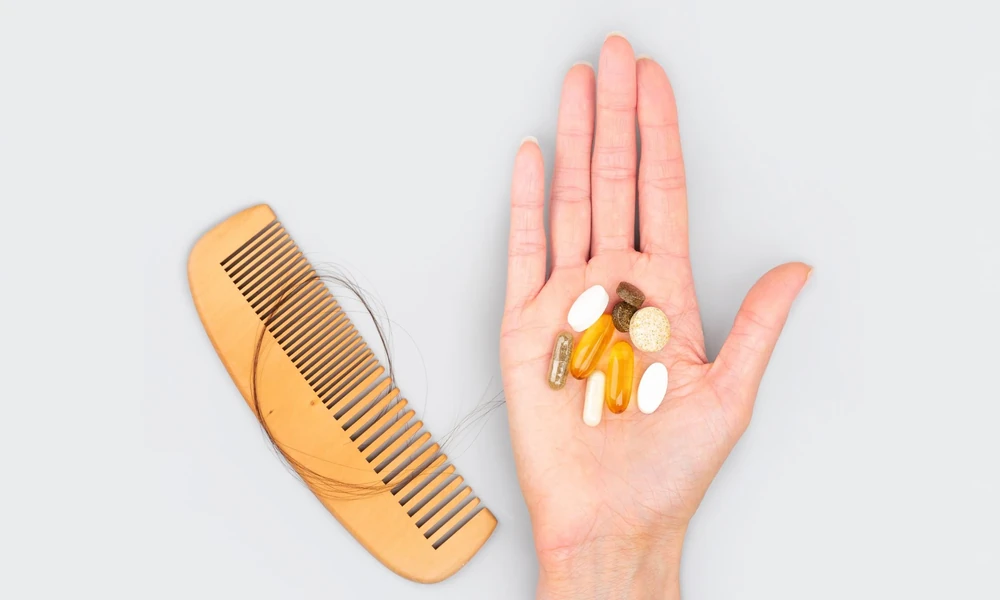
There are a number of hormonal changes in a woman’s body which occur during pregnancy and labor, which may have some impact on her overall well-being as well as hair growth cycle.
In most cases, pregnant women have thicker hair but shed more hair a few months after giving birth. Such a situation is called postpartum hair loss.
Postpartum hair loss is considered to be a temporary condition associated with hormonal changes that happen after giving birth.
While losing plenty of hair after brushing or even washing is scary, women usually recover gradually when their hormones stabilise.
Hair growth supplements for women with postpartum hormonal changes can be used to help maintain healthy hair if hair loss is caused by some deficiency of nutrients.
The ingredients of such supplements are usually vitamins and minerals that help promote growth of hair follicles. Nevertheless, it should be noted that supplements cannot make hormonal changes.
What Is Postpartum Hair Loss?
Postnatal hair fall is an increased hair fall phenomenon that tends to develop after childbirth.
When a woman gets pregnant, the oestrogen hormone becomes more active and increases the growth of hair follicles.
This causes reduced hair shedding and consequently, the hair becomes thicker and denser.
Once a baby is born, oestrogen activity decreases, and the majority of hair follicles begin to be at rest.
The hair strands that were kept active during pregnancy start falling off during the same period.
The phenomenon is called telogen effluvium. Women experiencing prolonged hair shedding may also look into options like hair growth tablets for women, after consulting a healthcare professional to identify any underlying nutritional deficiencies.
Postpartum hair fall usually begins two to four months after childbirth, can become noticeable around three or four months, and tends to improve after six to twelve months.
How Do Postpartum Hormones Affect Hair Growth?
The hormones are known to control the growth of hair. The change in hormones can lead to temporary changes in the hair & hair loss, which happens after childbirth.
1. Decrease in Oestrogen
Oestrogen hormone is high during pregnancy, and this enables the growth of your hair. After childbirth, the level of oestrogen reduces which leads to more number of hair follicles in resting phase,which causes hair loss.
2. Changes in Progesterone
There is also a significant reduction in the level of progesterone hormone after delivery. The changes in the hormones are just the natural process of the body.
3. Thyroid Hormone Changes
Postpartum thyroiditis is the condition in which there are changes in the level of thyroid hormones after child birth. Thyroid hormone imbalances are associated with hair loss, tiredness, and weight changes.
4. Increased Physical Stress
Childbirth may put physical stress on the body. Lack of sleep, stress, and changes in nutrition may cause increased hair fall.
Before starting any supplement, consider the following:
- Consider the suitability of the medicine during breastfeeding period.
- Exclude supplements with an overabundance of vitamins and minerals.
- Do not use different types of multivitamins together without considering the composition.
- Seek medical opinion before you take hair growth pills.
- Keep using recommended prenatals and postnatals medicines according to your doctor’s recommendations.
How Long Do Hair Growth Tablets Take to Show Results After Pregnancy?
Hair growth is a gradual process.
Here is a practical timeline:
- First 1-2 Months: Nutrition starts to provide necessary nutrients. No visible hair growth is expected at this point.
- Months 2-3: Women who had deficiencies before may start improving because of deficiency treatment. Still, hair shedding is likely to continue.
- Months 3-4: Some women may notice a reduction in excessive hair shedding and the appearance of first signs of hair growth.
- Months 4-6: Women may gradually see improvements in hair thickness and condition due to the restoration of the hair growth.
- Months 6-12: In most cases, women improve their postpartum hair shedding problem in this time period.
These timelines are not promises; hair growth tablets may not fasten the process of recovery from hormonal hair shedding.
Here is a realistic timeline:
- First 1-2 Months: Nutritional supplements begin providing essential nutrients. Visible hair growth is generally not expected during this stage.
- Months 2-3: Women with nutritional deficiencies may begin noticing improvements after correcting those deficiencies. However, postpartum shedding may continue.
- Months 3-4: Some women may notice reduced excessive shedding and early signs of new hair growth.
- Months 4-6: Hair density and overall hair condition may gradually improve as the natural hair growth cycle recovers.
- Months 6-12: Most women experience significant improvement in postpartum hair shedding during this period.
These timelines are estimates, not guaranteed results. Hair growth tablets do not necessarily speed up the natural recovery of hormone-related hair shedding.
Natural Ways to Support Hair Growth After Childbirth
1. Eat a Balanced Diet
2. Include Iron-Rich Foods
3. Consume Enough Protein
4. Avoid Tight Hairstyles
5. Avoid Excessive Heat Styling
6. Get Adequate Rest
7. Manage Stress
Conclusion
Hair growth tablets in women who experience hormonal imbalance due to delivery may be useful for the provision of nutrients in case hair fall is linked to deficiencies in necessary vitamins and minerals.
Iron, biotin, vitamin D, vitamin B12, zinc, and folic acid have various roles in the processes needed for the maintenance of normal hair health.
Nevertheless, hair fall during the postpartum period is primarily caused by natural hormonal imbalance that happens after delivery. Usually it gets better over time as hormone balance is restored.
The use of hair growth tablets should not be the only solution to treat any condition. Instead, a woman should follow a well-balanced diet, consume enough protein, take proper care of her hair and treat the nutritional deficiencies if identified.